American Bully XL Colors & Patterns
Sep 30, 2025
American Bully Colors, Patterns, and Kennel Club Registration: What Every Owner Should Know
By BDB (Big Dawg Bullies)
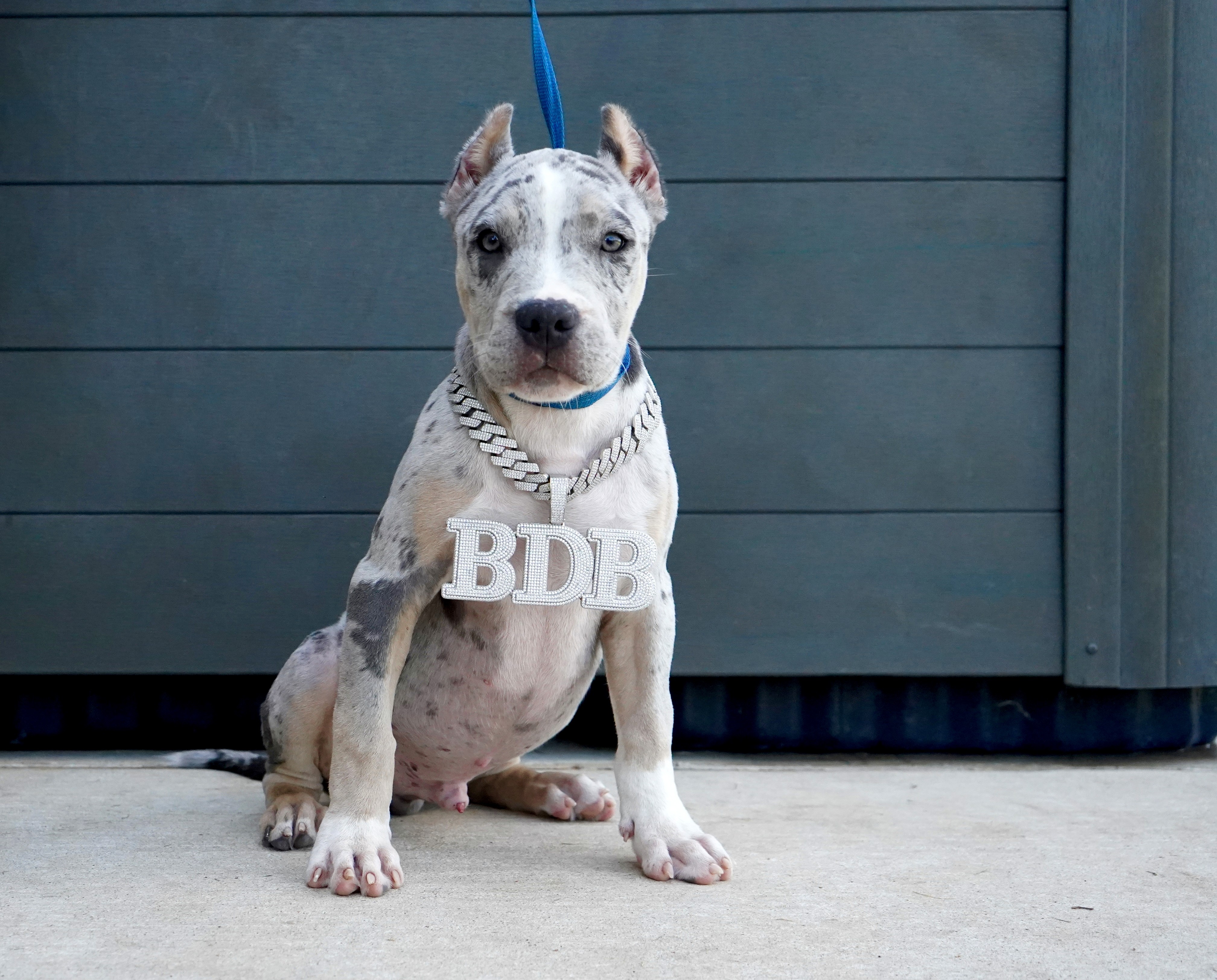
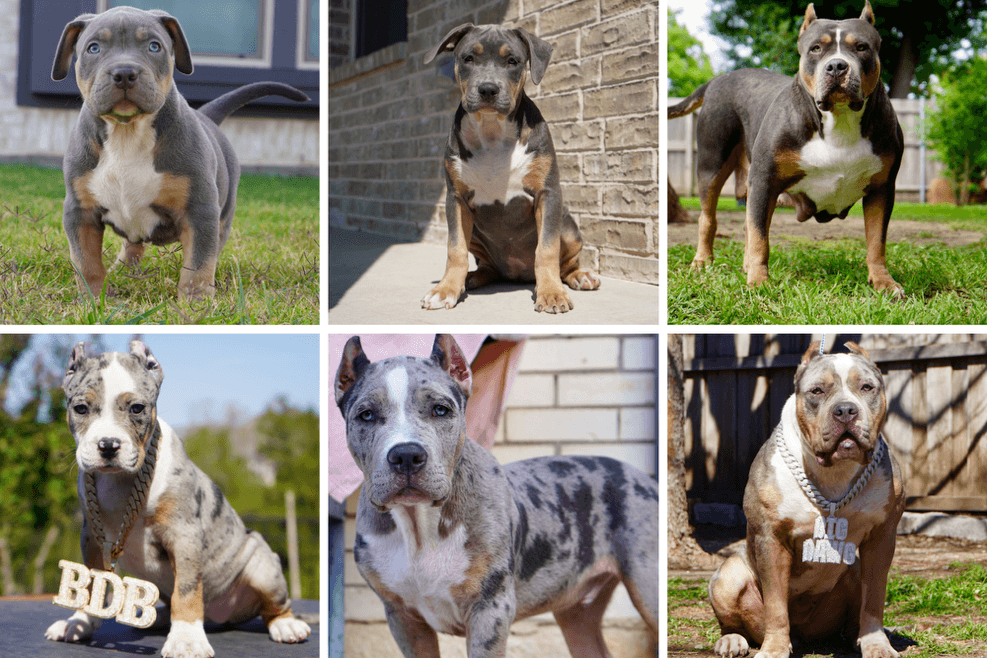
The American Bully is one of the most visually diverse dog breeds, known for its wide range of coat colors and patterns. At BDB, we’re proud to produce high-quality Bullies in colors such as black, blue, chocolate, lilac, white, and piebald, many of which also carry merle and tricolor patterning.
Understanding coat color genetics (especially the merle gene) is essential for making responsible breeding decisions. This article breaks down the most common American Bully coat types, explains the merle gene, and outlines how two of the most respected registries, ABKC and UKC handle color eligibility.
Common American Bully Colors and Patterns
Lilac (also known as Champagne or Purple):
Lilac is a diluted color that results from the presence of both the dilution gene (d/d) and the brown gene (b/b). The result is a light, silver-lavender tone. Depending on the kennel or region, some may refer to this color as champagne or purple.
Lilac Merle: When the merle gene is present, the coat will have swirls or patches in lighter and darker tones across the lilac base.
Chocolate:
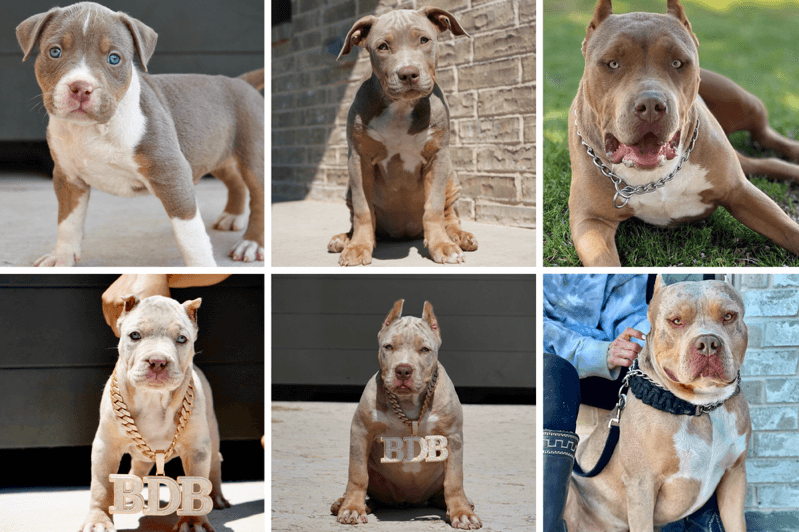
Chocolate Bullies carry two copies of the brown gene (b/b), producing coats in shades of brown ranging from light to dark.
Chocolate Merle: Chocolate dogs with the merle gene display marbled or patchy patterns on a brown base.
Black:
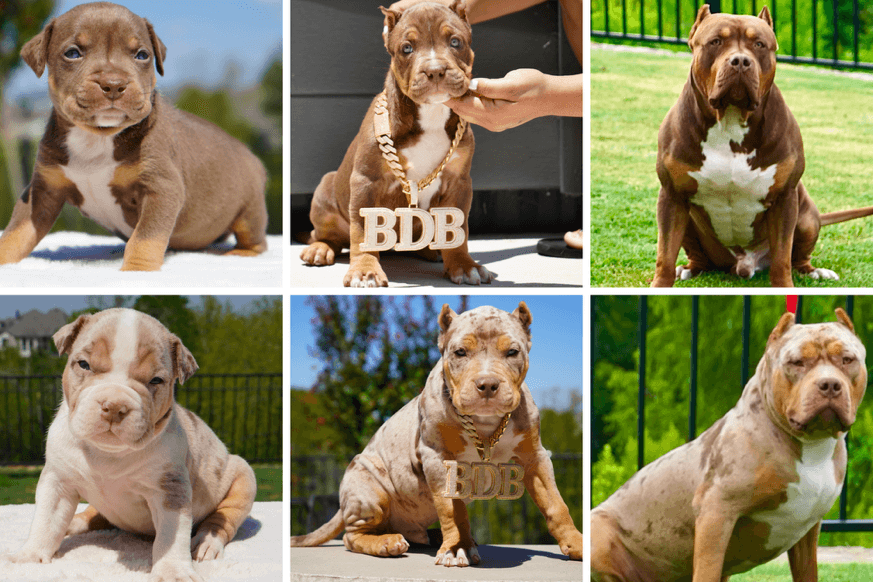
Black is a dominant color and one of the foundational coat colors in the American Bully breed. True black dogs have a rich, deep pigment.
Black Merle: Merle patterning on a black coat can result in gray or silver patches.
Blue:
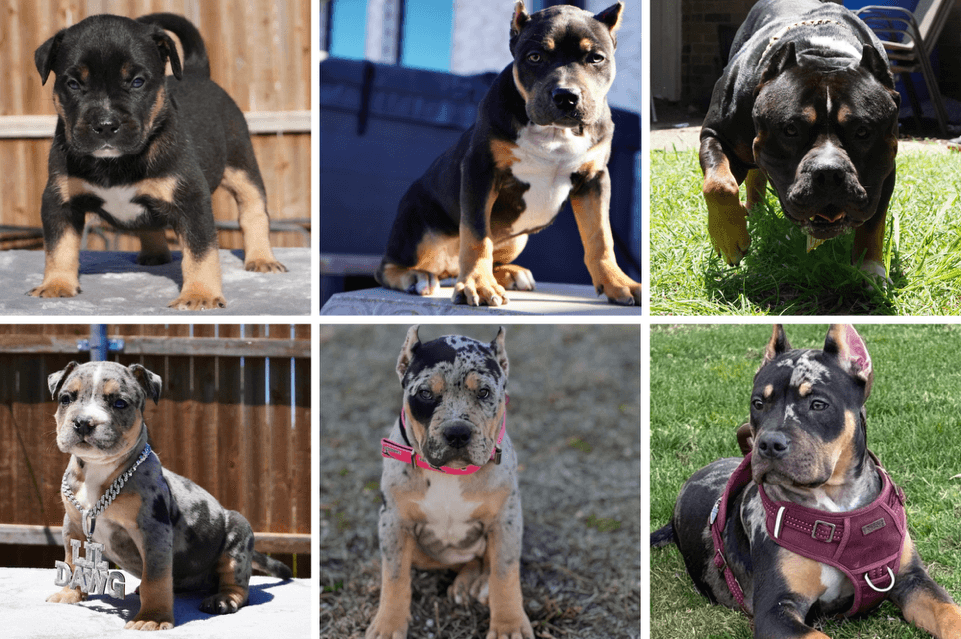
Blue is the diluted form of black, caused by two copies of the dilution gene (d/d). It results in a steel gray or slate-colored coat.
Blue Merle: A blue base with lighter gray or silvery marbling caused by the merle gene.
White:
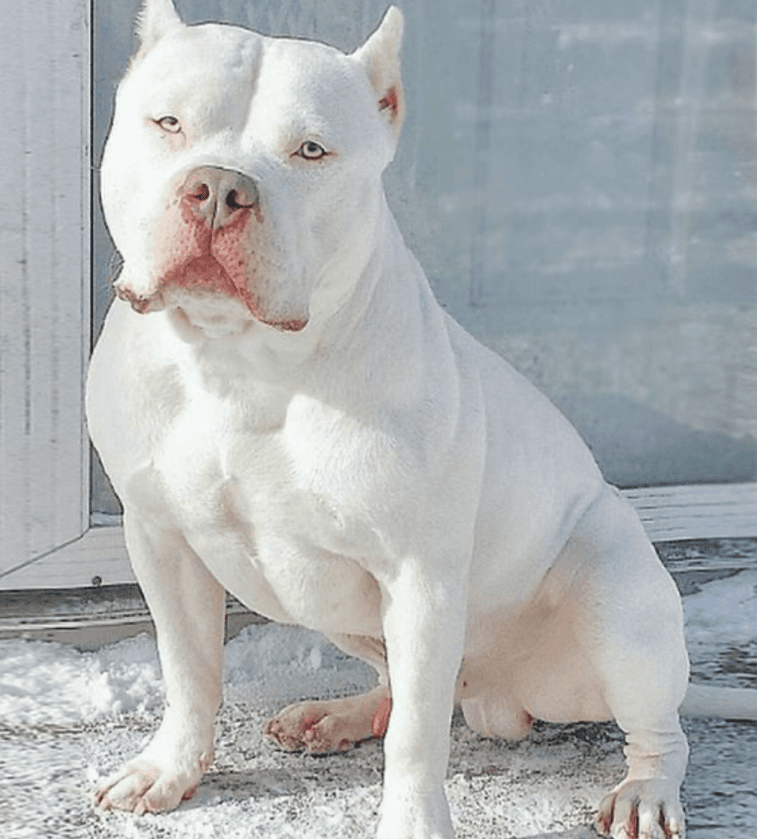
White American Bullies have predominantly white coats, often caused by high expression of the white spotting gene (S). Some white Bullies may still carry other color genes that are hidden due to the lack of pigment. This is why testing is important, especially if breeding is intended.
Fawn:
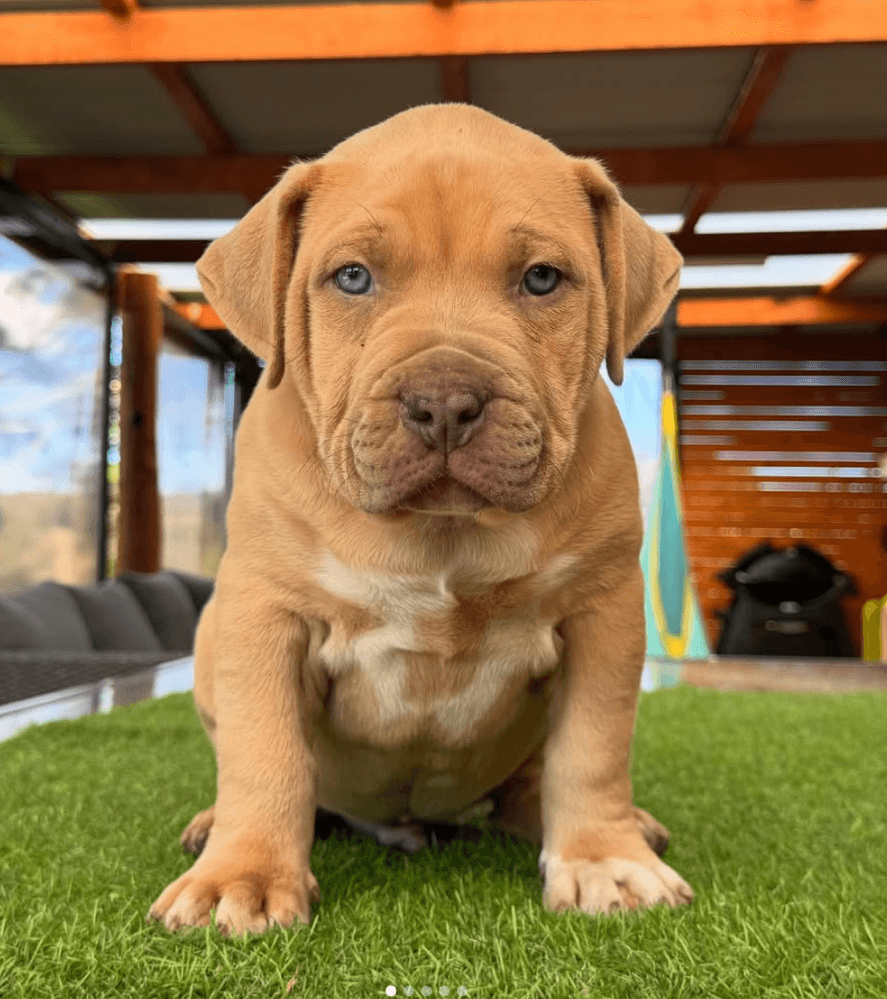
Fawn is a tan or light brown color that ranges in shade from cream to deep caramel. It is derived from diluted red pigmentation.
Red:
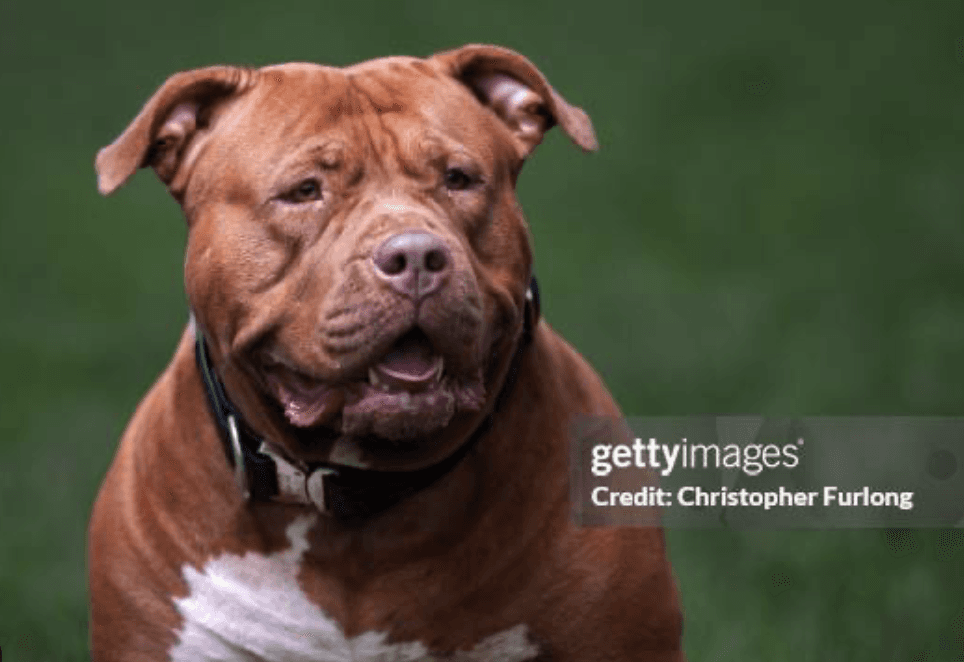
Red Bullies display a deeper, rust-colored tone. Red and fawn can sometimes be confused, but red is generally richer and darker.
Brindle:
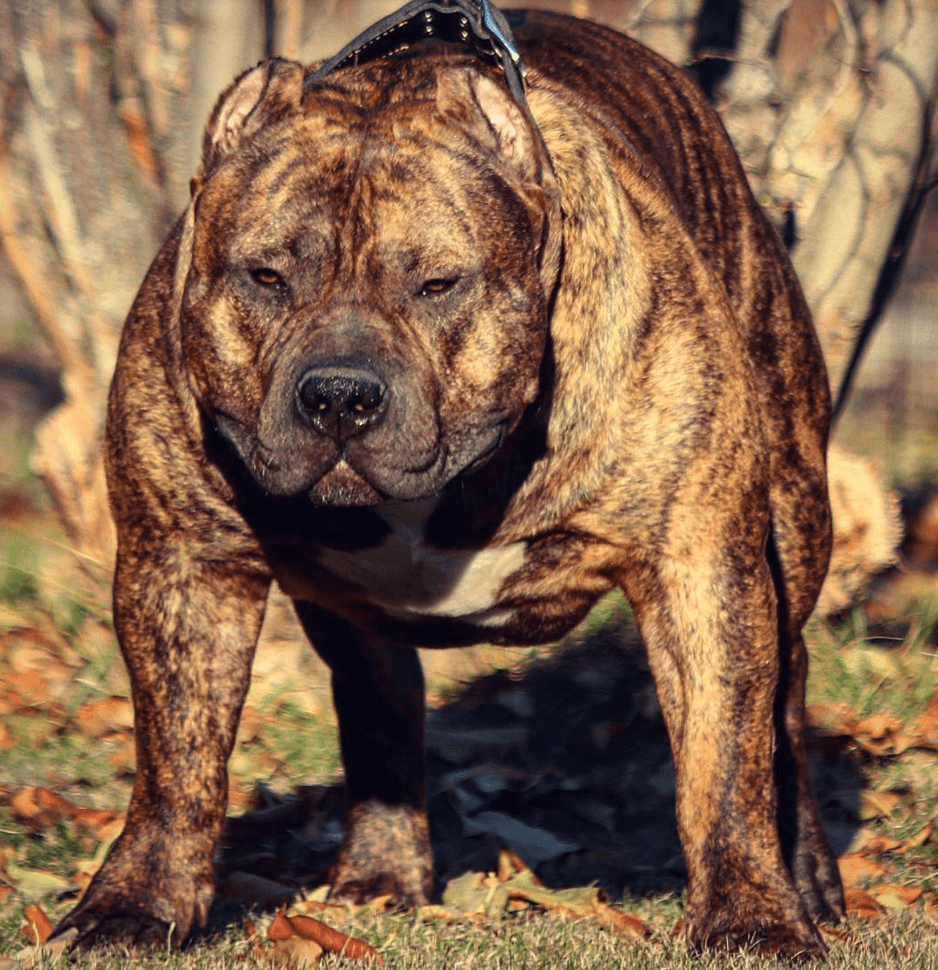
Brindle is a coat pattern consisting of dark stripes or streaks over a lighter base color, commonly fawn or red. Though not a color itself, brindle can appear in various shades and is a recognized pattern in the breed.
Brindle Merle: While rare, brindle merles do exist but are not always accepted by all kennel registries.
Piebald (Pied):
Piebald Bullies have a predominantly white coat with large patches of another color such as black, blue, chocolate, or lilac. Piebald dogs can sometimes carry the merle gene, even if it isn’t visible, making genetic testing especially important.
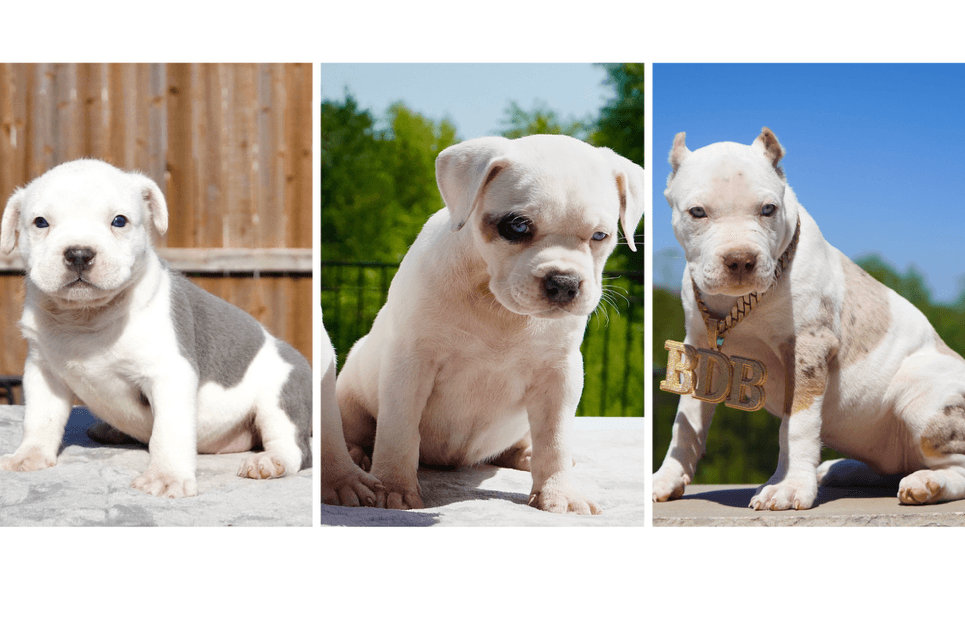
Tricolor:
Tricolor dogs have a primary base coat color (such as black, blue, chocolate, or lilac) along with distinct tan points and white markings. Tricolor is a pattern, not a color, and can occur in both solid and merle dogs.
Ticked Pattern:
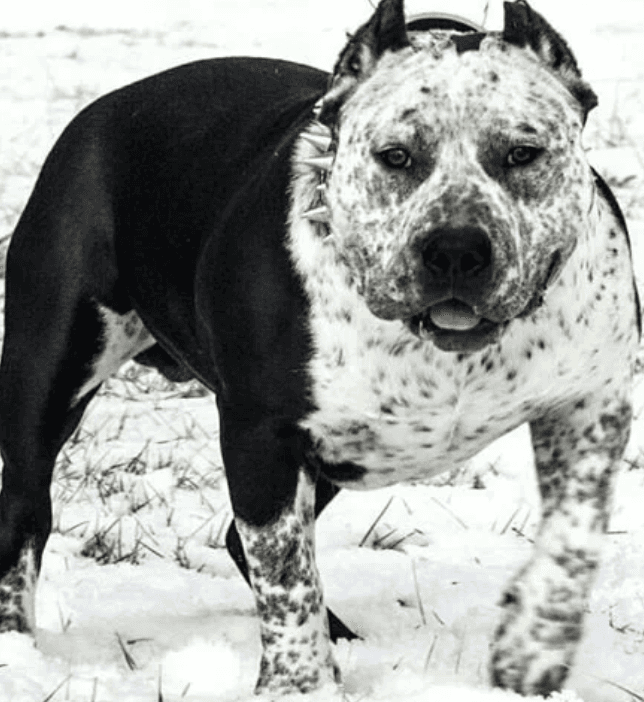
Ticking appears as small spots of color on a white background, often seen on the legs, face, or undercoat. This pattern can be found on piebald dogs and is genetic in nature.
What Is the Merle Gene?
The merle gene (M) is a dominant gene that alters pigmentation, creating marbled or patchy color patterns. While it produces desirable visual traits, it also affects pigmentation in the eyes and inner ears, which can lead to serious health complications if not managed responsibly.
Breeding two merle dogs together (M/M) is strongly discouraged, as this can result in what is known as a "double merle"—a dog at high risk for congenital deafness, blindness, or severe eye deformities. Responsible breeders must avoid merle-to-merle pairings.
Phantom or Cryptic Merle
Some dogs carry the merle gene but do not express it visually. These are referred to as phantom or cryptic merles and can only be identified through genetic testing. A dog that appears solid may still carry the merle gene, which could lead to an unintentional merle-to-merle breeding if not tested properly.
Why We Recommend Color Testing
At BDB, we prioritize the health and genetics of our dogs. Color and merle testing are essential tools for any breeder working with merle or piebald lines. Genetic testing helps us:
* Confirm whether a dog carries the merle gene (including cryptic merle)
* Identify the presence of other coat color genes
* Avoid dangerous or disqualifying breeding combinations
* Ensure ethical and informed decisions in our breeding program
Our Recommended Testing Lab: UC Davis
We recommend the Veterinary Genetics Laboratory at UC Davis for coat color and merle testing. Their services are widely trusted in the breeding community for accuracy and comprehensive genetic analysis.
A Note from BDB: Our Program Focus
At BDB, we focus on producing American Bullies with healthy structure, sound temperament, and beautiful coats. So far, we have produced the following colors and patterns:
* Black
* Blue
* Chocolate
* Lilac
* White
* Piebald
* Merle variants in each of the above base colors
* All of our productions are tricolors
We currently do not produce fawn, sable, red, or brindle dogs but we remain open to expanding our program in the future. Would you like to see those colors added to our lineup? Let us know, we value your input.
To sum it up:
Coat color and pattern play a major role in the beauty and individuality of each American Bully, but they must be managed with care. Understanding the genetics behind these traits is crucial, particularly when working with the merle gene.
At BDB, we’re committed to transparency, education, and responsible breeding practices. Whether you’re looking to purchase, show, or breed an American Bully, knowing how coat color works and how to register it properly is an important step toward preserving the integrity of this incredible breed.
For more information about our dogs or to inquire about upcoming litters, feel free to contact us at Big Dawg Bullies.
Q&A: American Bully Colors
Q: What colors are accepted in American Bully registries?
A: ABKC accepts merle, while UKC does not. Both recognize black, blue, chocolate, lilac, white, fawn, red, brindle, piebald, and tricolor.
Q: Are merle American Bullies rare?
A: Yes. Merle is less common and requires responsible breeding due to health risks.
Q: What is the rarest American Bully color?
A: Lilac merle and brindle merle are among the rarest, partly because of their genetics and kennel club restrictions.
Q: Is genetic testing necessary for American Bullies?
A: Absolutely. Testing prevents unsafe pairings like merle-to-merle and ensures healthier litters.
Q: Can a merle Bully be UKC registered?
A: No. Only ABKC recognizes merle Bullies.
Big Dawg Bullies
Discover family-raised, ABKC registered American Bully XL puppies for sale in Texas. Our exceptional XL Bully puppies, XL Bullies puppies, and XXL Pitbull puppies come with health guarantees and loving temperaments, ready to join your family.
Main
Services
Shop & Legal
Products
Adoption Retired Females
Terms & Conditions
Privacy Policy
Cookies
© 2025 Big Dawg Bullies – All Rights Reserved